POV: "I Make My Own Money" Became Your Excuse to Stay Broke
Summary
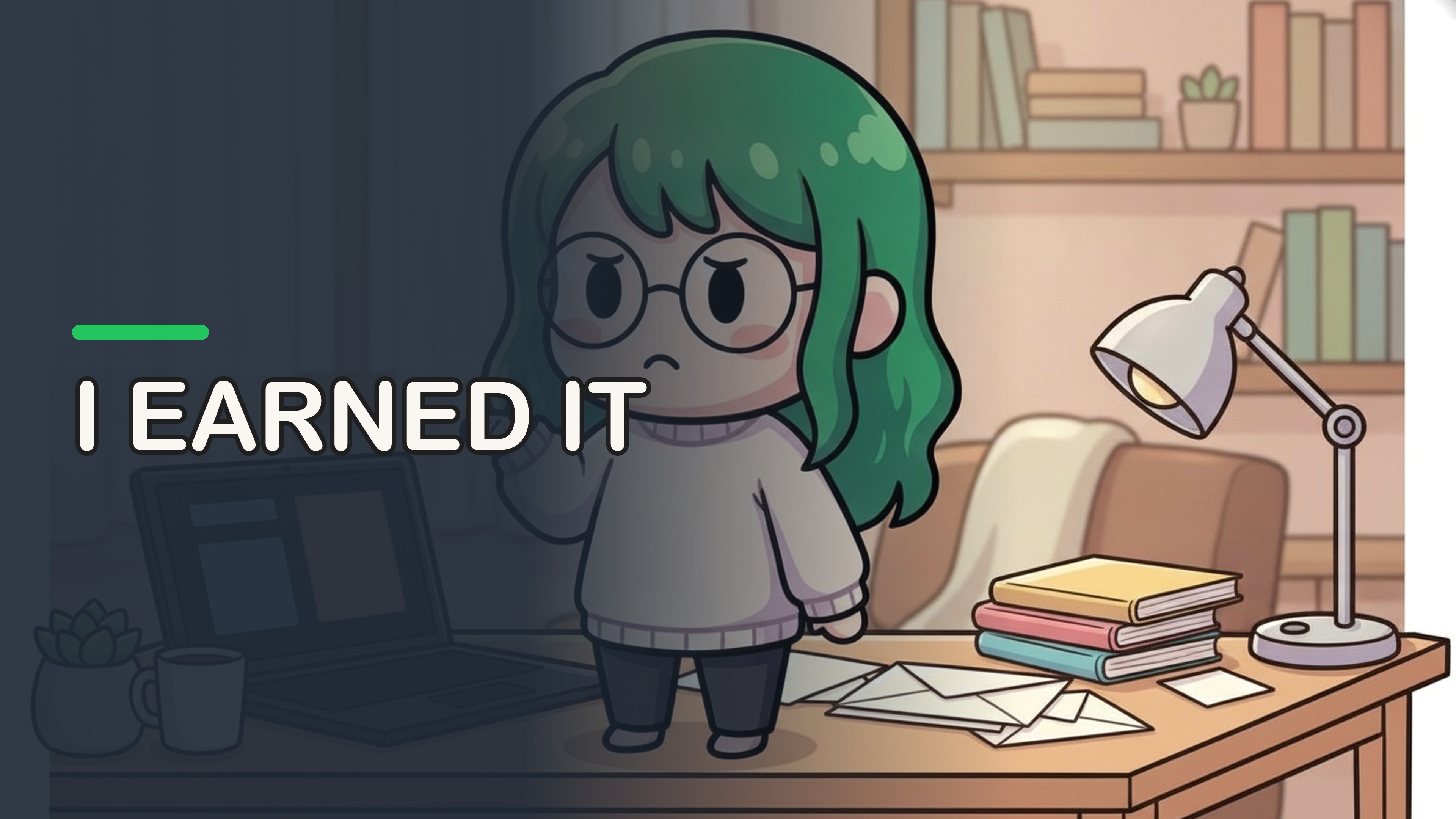
You are at the checkout, or your thumb is hovering over the place order button, and you hear yourself reach for the line. I earned it.
Earning your own money is freedom, but freedom is not the same as making every purchase untouchable. Independence becomes expensive when any question about spending feels like an attack on adulthood.
Transcript
Read the full transcript
You are at the checkout, or your thumb is hovering over the place order button, and you hear yourself reach for the line. I earned it. I work hard. I earn my own money. Nobody hands me anything, so I can spend it how I want.
And you can. That is the whole point. You fought your way to the place where nobody gets to tell you what to do with your money. So why does the account never actually grow? Every payday you feel independent. Every month, somehow, you are back at zero.
So you reach for the usual labels. I am just bad with money. I am irresponsible. I am a spender, that is just who I am.
Here is what I want to do in the next few minutes. I am not going to tell you to stop earning, or stop enjoying it, or feel guilty for wanting nice things. I am going to show you the quiet trick your own independence is playing on you. Because I earned it is not proof that you are free. It is one of the most expensive sentences you own.
So let me take the shame out of it first, because you are going to need to hear this without flinching.
That feeling, I earned it, so I deserve it, is not a character flaw. It has a name in behavioral science. It is called the licensing effect. When you do something good, or hard, or disciplined, your brain hands you a little moral credit. And it will happily let you spend that credit on something indulgent, guilt free. The purchase stops feeling like spending, and starts feeling like a reward you already paid for.
Researchers Uzma Khan and Ravi Dhar showed this cleanly. When people first did something virtuous, even just imagining they volunteered, the number who then chose a luxury over something practical roughly doubled. Fifty seven percent picked the designer item, compared to twenty eight percent who had not. Same people. The only thing that changed was that they felt they had earned it first.
Now here is the twist for you specifically. You do not have to imagine being virtuous. You actually earn your money, every single day, so you build up a real, felt sense of I worked for this. Which means the permission slip is always in your pocket. The harder you feel you worked, the more spending feels like something you are simply owed. Your independence is not the problem. It is just quietly signing the checks.
So let me walk you through how independence becomes an excuse, one sign at a time. See how many of these are yours.
Number one. Every payday becomes a purchase. The raise, the bonus, the good month, it rarely lands in savings. It becomes a reward. You worked for it, so you mark the occasion, and the money that was supposed to become your cushion turns into a celebration instead. The paycheck arrives, and within days it is already promised to a treat. The cushion never gets built, because every time it starts to grow, some part of you feels like you earned the right to spend it back down to zero.
Number two. Your life looks like you made it. The apartment, the wardrobe, the trips, the dinners that show up on your feed. From the outside, and honestly from the inside too, you look like someone who is thriving. And that is exactly the trap, because looking like you made it and actually being safe are two completely different things. The image is fully funded. The cushion underneath it is not. So it all holds together beautifully, right up until the one month something goes wrong, and you realize there is nothing underneath the picture at all.
Number three. You call it investing in yourself. This is the sign that wears the nicest outfit. The course you keep meaning to finish, the skincare, the wellness membership, the reset that always gets filed under self care. And some of it is genuinely worth it. But investing in yourself has quietly become the phrase that ends every money argument before it starts. Charles Schwab even has a name for the everyday version of this. They call it treat culture, where the daily coffee and the spontaneous order stop being splurges and get rebranded as self care. And this is not an accident that just happened to you. One marketing executive said out loud that the goal is to run treat yourself messaging all year round, and to help assuage the guilt people feel about treating themselves. Read that again. The little sting of guilt that was supposed to slow you down is being removed on purpose, by people who get paid when you spend.
Number four. A budget feels like a cage. You spent years clawing your way to a place where nobody controls your money. So a limit, a plan, a spreadsheet, feels like the exact thing you escaped from. Tracking feels like being watched, like asking permission in your own life. So you refuse, and you quietly call that refusal freedom. But not looking is not freedom. It is just spending in the dark and hoping the number is fine.
Number five. You measure success by what you earn, and almost never by what you keep. Income is what you earn. Wealth is what you keep. And when someone asks how you are doing, you think about your salary, your title, your rate. You almost never think about your net worth, and if you are honest, there is a decent chance you could not say that number out loud right now. Not knowing is the symptom. Some part of you already senses it, which is why a certain question, how much have you actually saved, can make your stomach drop a little, even on a good month. So you keep the score you like, the one that is going up, and quietly avoid the one that is not.
And this is where the system quietly rewards the wrong thing. In a Vanguard survey this year, more than seventy percent of women said they felt confident about saving money, and they had every reason to, because they were saving. But nearly half of the women surveyed were keeping that money in accounts earning less than three percent, quietly losing ground to inflation. The catch was never the saving. It is that almost no one tells you the difference between money that just sits, and money that actually grows.
Number six. You are going to get serious later. When you earn a little more. When things finally settle down. When the big paychecks start. So the money you already have just sits in checking, doing nothing, waiting for a future you who has finally earned the right to be responsible. But later never actually arrives, because right now always feels a little too early, and there is always one more reason to start next month instead. The responsible version of you stays permanently one raise away.
Now here is the part that actually matters. The part that is not a joke, and not a scold.
You started spending freely to prove you were independent. To prove that you had made it, that you answered to no one, that your money was finally yours. But think about what freely spending all of it actually leaves you with. No cushion. No assets. Nothing that keeps paying you after the paycheck stops.
Which means you are one bad month away from the exact thing you swore you would never go back to. Needing the job. Needing the raise. Needing the relationship, or the city, or the situation, because leaving it costs money you do not have.
Income without ownership is not freedom. It is a nicer looking version of dependence. You can earn a beautiful salary and still not be able to walk away from anything, because everything you earn is already spoken for before it arrives.
That is the cruel part. The spending that felt like independence is the thing quietly keeping you dependent. Real independence was never being able to buy anything you want. It is not needing the next paycheck to survive.
So what do you actually do. And the answer is not become a more disciplined person. It is to stop relying on discipline at all.
Here is the most important thing behavioral science knows about saving. The default beats willpower almost every time. In a well known study by Brigitte Madrian and Dennis Shea, one company changed nothing about the money. They just switched the savings plan so that employees were signed up automatically, unless they chose to opt out. Participation jumped from forty nine percent to eighty six percent. Same people, same paychecks. The only thing that changed was whether saving happened by default.
So you are going to make saving your default. Pay yourself first. The day your money lands, before you can spend a single cent of it, an automatic transfer moves a set amount into savings and into investments. Not whatever is left at the end of the month, because there is never anything left at the end of the month. It comes out first, automatically, so the I earned it voice never even gets to vote.
And it does not have to be a big number to start. The size of the first transfer is not the point. The point is that saving stops being a decision you have to win every single month, and becomes something that already happened before you woke up.
Then do the one thing that quietly builds real wealth. Every time you get a raise or a bonus, increase that automatic transfer before your lifestyle catches up to it. There is a program built on exactly this idea, called Save More Tomorrow, where people committed their future raises to savings in advance. Their saving rate climbed from three and a half percent to almost fourteen percent. Not by earning more, but by capturing the raise before it turned into a bigger apartment.
And do not just park that money. Cash sitting in a plain account slowly loses to inflation. Long term money is meant to be invested, so send it somewhere boring that grows, like a retirement account or a simple index fund that just owns a little slice of the whole market, and then leave it alone. That is the real flex. Not money that leaves your account, money that quietly works while you sleep.
None of this asks you to stop enjoying what you earn. Give yourself a real treat budget, a set amount that is guilt free and genuinely yours, so self care can go back to being an actual treat instead of the excuse. But it comes after you pay yourself first, not instead of it. You are still independent. You are just finally being independent for future you too.
So let me ask you the honest version of the question.
Which line is actually yours. Is it, I earned it, so I deserve it. Is it, I will get serious when I earn more. Is it, a budget feels like a cage. Be specific, because the sentence you defend the hardest is usually the one costing you the most.
And here is the reframe I want you to leave with. Making your own money was never the finish line. It was the starting line. You did not earn the right to spend it all. You earned something better. You earned the right to keep it.
The most independent thing you will ever do is not needing the next paycheck. So pay yourself first, let it grow, and let being independent finally mean what you always wanted it to mean.
If this felt a little too personal, send it to the friend who says I earned it right before she buys the thing. And tell me which line you are breaking first.
Sources & further reading
These are the research sources reviewed for this episode. Evidence and guidance can change; updated entries show a new date above.
- Licensing Effect in Consumer Choice— Journal of Marketing Research
- The Power of Suggestion: Inertia in 401(k) Participation and Savings Behavior— National Bureau of Economic Research
- Save More Tomorrow: Using Behavioral Economics to Increase Employee Saving— Journal of Political Economy
More in Work, Income & Lifestyle
Start with your own patterns
The free Money Pattern Lab turns seven ordinary days into one clearer picture of your spending triggers.
Your PDF opens immediately. Confirm your email for the free welcome series and weekly letter. Unsubscribe whenever.