The 5 Levels of Buying a Home Alone — Renting to Owning
Summary
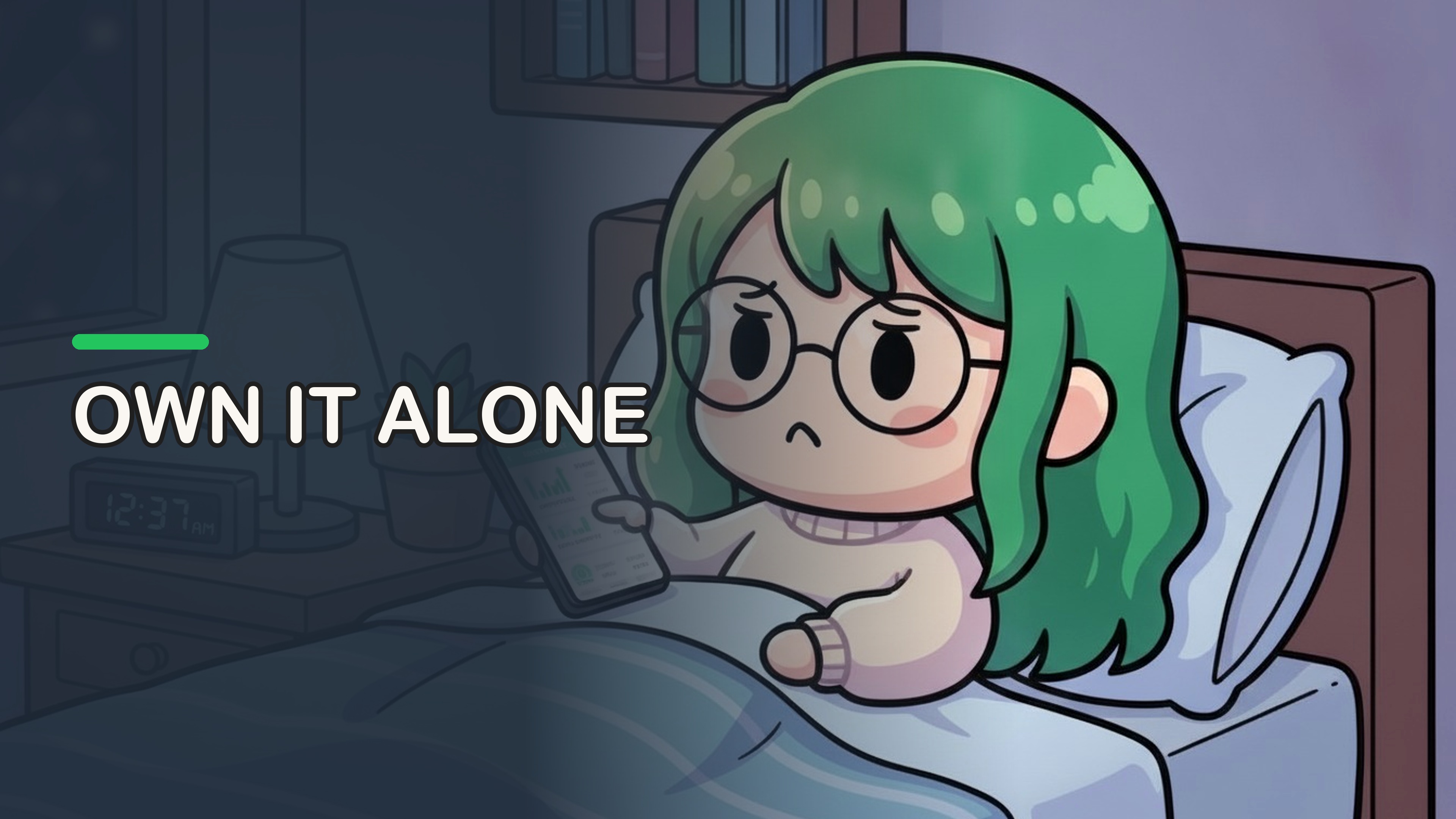
You close the listing app. Then you open it again twelve minutes later, as if a two-bedroom bungalow might have dropped into your budget while you were washing your face.
Buying alone is not just a smaller version of buying as a couple. One income has to carry the deposit, approval, repairs, and every ordinary month after the keys arrive.
Transcript
Read the full transcript
You close the listing app. Then you open it again twelve minutes later, as if a two-bedroom bungalow might have dropped into your budget while you were washing your face.
You calculate the mortgage payment. You compare it with your rent. You zoom in on somebody else's photo of a key beside a champagne glass. Then your lease renewal lands in your inbox, and suddenly renting does not feel like a housing arrangement. It feels like evidence against you.
You tell yourself you are late. Maybe bad with money. Maybe too single.
But something is changing. In the latest National Association of Realtors survey, single women made up thirty-five percent of Gen Z homebuyers. Single men made up eighteen percent. Among these young buyers, many women were not waiting for a spouse. The usual order of the milestones is changing.
That does not mean buying alone is suddenly easy. Gen Z was only four percent of buyers in that survey, and first-time buyers overall were at the lowest share the association has recorded since nineteen eighty-one.
So this is not a video about manifesting a deed by buying fewer iced coffees. It is the five real levels between renting and owning alone, what each level requires, and how to make sure the house you buy for independence does not quietly take your independence away.
Wanting your own home is not shallow. Maybe you want a place where a landlord cannot raise the rent next year. Maybe you want to paint the walls, get a dog, plant something, or stop treating marriage like a permission slip for stability.
That desire is partly about control and permanence. It is also about what owning seems to say: you are safe, successful, and finally moving forward.
The internet blends those desires. It shows the key, not the closing disclosure. It shows the living room, not the insurance quote or the compromises behind the purchase.
That independence carries history. Federal law did not protect women against credit discrimination based on sex or marital status until nineteen seventy-four. Before that, many women were denied credit or treated differently simply because they were women or because they were married.
But a right is not a deadline. Renting is not a failed version of owning. And the first-time buyer share falling to a record low is a market fact, not a character review.
The trap begins when a valid aspiration hires panic as its real-estate agent. Panic can turn a preapproval into your budget, make one good tour feel like destiny, and shrink the whole decision down to the monthly mortgage payment.
The way out is to know which level you are actually on.
Level one is the ashamed renter.
At this level, you are not just paying rent. You are paying rent while mentally defending it. Every renewal feels like money disappearing. Every homeowner post becomes a progress report you did not ask for.
The pressure comes from a social clock. Homeownership has become shorthand for stable, successful, and grown-up. So renting feels like a stalled life, even when it gives you flexibility, leaves repairs with the landlord, or gives you time to build cash.
Urgency can push you into a market you cannot afford. Or it can leave you saving toward one vague number and feeling defeated every month it remains enormous.
Meanwhile, comparison steals your attention. You are trying to live in your apartment while mentally moving into every house on your phone.
The first upgrade is separating the desire from the deadline. Write down what you want ownership to change. Then choose one next move instead of trying to solve the entire purchase tonight.
Level two is the runway builder.
This is where one enormous savings goal becomes three real piles of money. Most people talk about the down payment as if the closing table accepts one dramatic pile and then politely stops charging you.
It does not.
The Consumer Financial Protection Bureau says closing costs typically run between two and five percent of the purchase price, separate from the down payment. You also need money for moving, inspection, immediate repairs, and a cushion that survives closing.
And twenty percent down is not the sacred entrance fee. Some eligible borrowers can use conventional loans with three percent down or Federal Housing Administration loans with three and one-half percent down. Local assistance may also exist. A smaller down payment can mean mortgage insurance and more interest, but it is a real path.
The shift is from proving you can save to giving each dollar one job. Otherwise, you can pour everything into the purchase, then own a kitchen with no money when the refrigerator sounds like a helicopter.
That is why one savings balance feels so stressful.
Now separate your cash to close, known move-in costs, and the emergency fund that remains afterward. On one income, that last bucket matters even more. There is no automatic second paycheck coming to absorb the first surprise.
Level three is setting your own limit.
You get preapproved. The number is higher than you expected. For nine beautiful seconds, you feel rich.
Then the number becomes an anchor. Homes below it start looking like compromises, even though the lender checked the loan, not the rest of your life.
Your real monthly cost can include principal, interest, property taxes, homeowners insurance, mortgage insurance, flood coverage, association dues, utilities, maintenance, and repairs. Taxes and insurance can rise. The mortgage headline is not the housing total.
If the lender says yes, it is easy to avoid asking whether the payment leaves room for retirement, medical costs, career changes, or anything that is not a roof.
That is how being house-poor starts. The payment works, but only if every ordinary month goes perfectly.
Set your all-in monthly ceiling before you tour. Use income you reliably earn now, not a future raise, roommate, freelance boom, or partner. Your number may be lower than the lender's. The gap is room to live.
Level four is the calm offer-maker.
This level begins the moment you walk into a house and mentally place your furniture. Now losing the property can feel like losing a future you already visited.
That is when people stretch their limit or treat inspections and insurance questions like obstacles. The house is no longer beige siding and an aging water heater. It is the version of you who finally made it.
Calm is a financial skill. The Consumer Financial Protection Bureau recommends comparing at least three lenders. It says multiple offers can potentially save six hundred to twelve hundred dollars per year. Compare the same loan terms, get an insurance quote, check the property risks, get an inspection, and read the closing documents.
Your written walk-away number matters because the version of you standing in the cute kitchen is not neutral. She has emotionally ordered the bar stools.
If you lose that calm, a few frantic decisions can follow you for years. Then come the bidding anxiety, document panic, and fear of asking one more question.
Buying alone does not mean handling every decision alone. A counselor, inspector, agent, or trusted friend can give you extra eyes while the decision stays yours. You are ready to offer when you can lose one house without losing the plan. The point is to still like the deal after the adrenaline is gone.
Level five is the resilient solo owner.
The keys are not the finish line. They are when ownership starts.
You know the difference between equity and cash. Home equity cannot pay tomorrow's plumber unless you sell or borrow against it. Your emergency fund can. Maintenance is not a personal attack, although appliances enjoy dramatic timing.
At first you ask, can I get approved for this house? Now you ask, can I own it without giving up everything else?
That means repair savings, insurance you understand, and room for other goals. You know who to call and what requires a professional. This is where buying solo becomes powerful. The decisions and timeline are yours. Your stability does not depend on relationship status.
But one income also means one job interruption, escrow jump, or major repair can push you into debt or make you delay maintenance. Without a reserve, the thing you bought for security can start making you feel trapped.
This is resilient solo ownership: the home supports your independence after closing, not just in the key photo.
And that is the cruel paradox of buying alone.
You can refuse to wait, save with incredible discipline, survive underwriting, and unlock your own door. Then you discover the payment leaves no room to leave a bad job. Closing emptied the savings that made you feel safe. The first major repair goes on a credit card.
The house can be yours while your choices become smaller.
Solo buying is not reckless. But approval is not financial security. A lender decides whether you can repay the loan. You decide whether the payment still leaves you choices.
The goal was never to prove that you do not need anyone. Everyone needs people. Just do not build the housing plan around a second income that does not exist.
You deserve the pride of owning in your own name. You also deserve enough margin to enjoy it.
So before you make an offer, use the Solo Owner Test. It has three numbers, and none of them is the lender's maximum.
Number one is cash to close.
This includes the down payment, realistic closing costs, inspection, moving, and repairs you already know about. It is not every dollar you have saved. If closing wipes out the emergency fund, you bought the house with the money that was supposed to protect you from the first surprise.
Number two is your all-in monthly ceiling.
Start with principal and interest. Add taxes, insurance, mortgage insurance, association dues, realistic utilities, and maintenance. Then leave room for retirement contributions, debt payments, health costs, and a life outside the house.
Do not use the payment you could survive during your most disciplined month. Use the payment that works during a boring month, an expensive month, and a month when your motivation has gone offline.
Number three is the post-close cushion.
This is liquid money still there after you get the keys. The Consumer Financial Protection Bureau uses three to six months of expenses as a usual range. Your number depends on your job, health needs, your home's condition, support network, and comfort with risk.
Then protect those numbers with one rule: write your walk-away price before you tour any serious contender.
Add four practical moves. Talk with a housing counselor. Research local assistance. Compare at least three lenders. And get a real insurance quote for the address. A generic estimate cannot tell you whether the roof or flood risk makes coverage expensive or even unavailable.
Your next move depends on what is missing. If renting feels like a verdict, name what you want ownership to change. If you are building the runway, separate the savings. If preapproval is driving the search, set your own limit. Before an offer, write the rules while calm. Once you own, automate the reserves that protect your other choices.
You do not graduate from renting by becoming worthy. You move toward ownership by becoming ready for the costs, choices, and responsibility you actually want.
So which level are you on right now: renting without shame, building the runway, setting your own limit, making a calm offer, or owning with a real cushion?
And which number do you need next: cash to close, the all-in monthly ceiling, or the post-close cushion?
Put the level in the comments, especially if you have been quietly treating your lease like a personal failure. Somebody else needs to see that renting with a plan is not standing still.
And send this to the friend who thinks she has to wait for the right person before she can even make a plan. She may choose partnership someday. She may choose to buy alone. Either way, her housing timeline belongs to her.
The goal is not a key photo. The goal is a home that makes your life more secure without making your world smaller.
Sources & further reading
These are the research sources reviewed for this episode. Evidence and guidance can change; updated entries show a new date above.
- National Association of Realtors — 2026 generational buyer findings and survey methodology— nar.realtor
- Associated Press — Single Gen Z women outpace Gen Z men to homeownership— apnews.com
- CFPB — Financial considerations of buying— consumerfinance.gov
- Federal Reserve — Equal Credit Opportunity Act— federalreserve.gov
- U.S. Department of Justice overview— justice.gov
- Foye, Clapham, and Gabrieli — Homeownership as a social norm and positional good— doi.org
- Housing in comparative perspective review— pmc.ncbi.nlm.nih.gov
- Manturuk on perceived control— doi.org
- Soman and Zhao — The Fewer the Better: Number of Goals and Savings Behavior— doi.org
- Gargano and Rossi, Goal Setting and Saving— papers.ssrn.com
- Consumer Financial Protection Bureau — Figure out how much you want to spend— consumerfinance.gov
- CFPB — Determine your down payment— consumerfinance.gov
- Fannie Mae — Closing-cost barriers for first-time and low-income buyers— fanniemae.com
- HUD — Buying a Home and housing-counseling resources— hud.gov
- CFPB mortgage-cost explainer— consumerfinance.gov
- CFPB — Shopping for a mortgage— consumerfinance.gov
- CFPB — Request and review multiple Loan Estimates— consumerfinance.gov
- CFPB — Closing on your new home— consumerfinance.gov
- NAR Economists' Outlook — Gen Z's path to homeownership— nar.realtor
More in Savings & Sinking Funds



Start with your own patterns
The free Money Pattern Lab turns seven ordinary days into one clearer picture of your spending triggers.
Your PDF opens immediately. Confirm your email for the free welcome series and weekly letter. Unsubscribe whenever.