POV: Your Friends Are Quietly Keeping You Broke
Summary
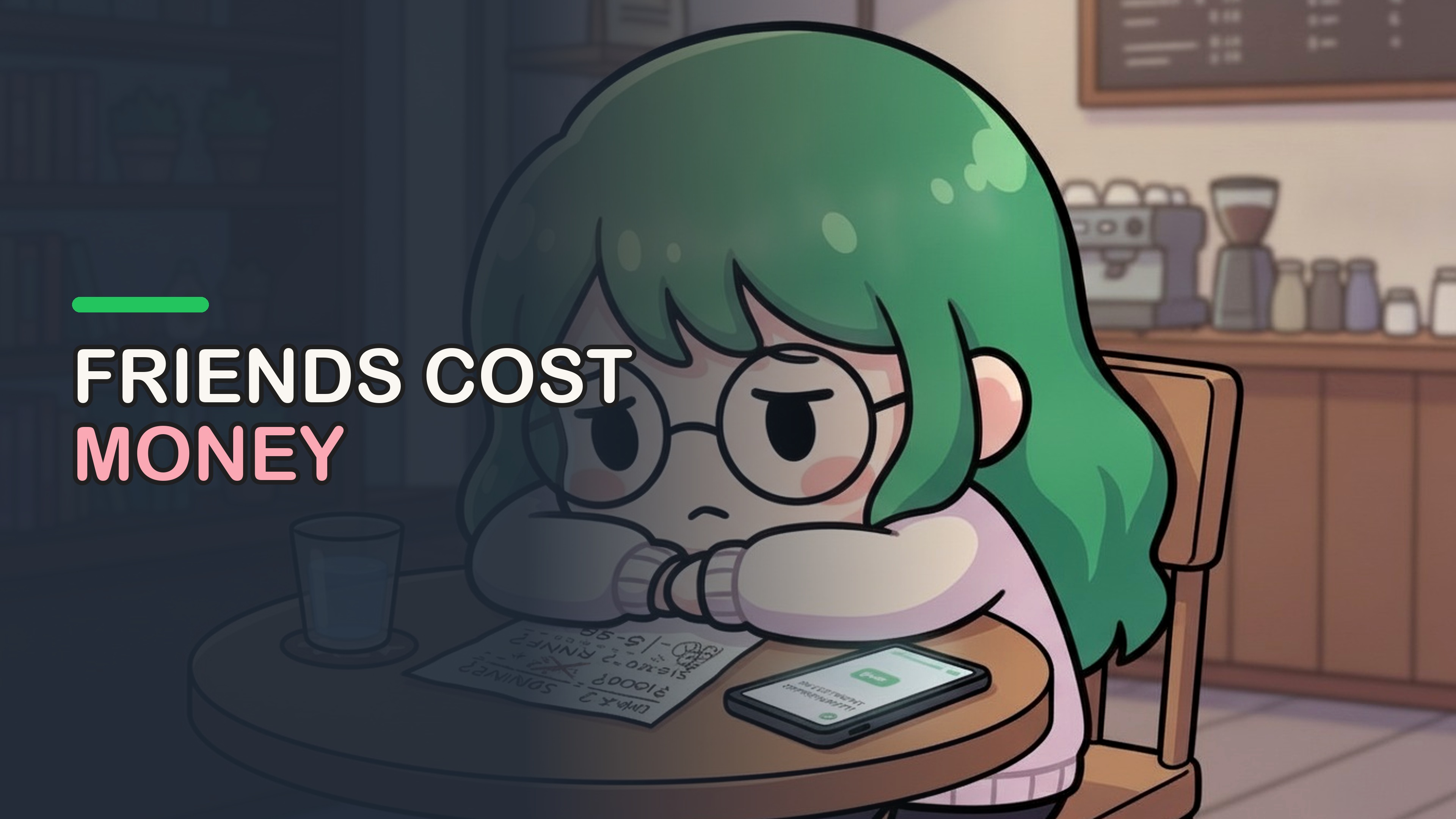
You see the group chat light up, and your stomach drops before you even read it.
Nobody ordered you to overspend; the dinner, trip, gift, and matching pace simply arrived as the price of belonging. Social spending pressure is hardest to see when everyone involved is lovely.
Transcript
Read the full transcript
You see the group chat light up, and your stomach drops before you even read it.
It is not an emergency. It is worse. It is a birthday dinner.
Someone found a cute place. Someone else says the menu looks amazing. A third person sends the reservation link, and suddenly your brain is doing math with the emotional stability of a wet paper towel.
You check your account. You remember rent. You remember the credit card payment you promised yourself you would finally take seriously. You remember groceries and gas.
Then you type, I am in.
Not because you are irresponsible. Not because you love overpriced appetizers with the passion of a hedge fund manager. Because saying no does not feel like saving money. It feels like risking your place in the group.
This is the part nobody admits. Some spending is not about the thing you buy. It is about the relationship you are trying to protect.
And that is why social spending is so slippery. It looks like dinner, flights, drinks, gifts, rideshares, outfits, and one more little deposit. But underneath, it is belonging priced in dollars.
Today we are decoding why friends can quietly keep you broke without ever trying to hurt you, why your brain treats a group plan like a social safety test, what the real cost can become, and the simple system that lets you protect your friendships without donating your future to brunch.
First, you are not imagining the pressure.
One Ally Bank survey found that Gen Z and millennials spend about two hundred fifty dollars a month on activities with friends. That is the quiet drip of dinners, birthdays, coffees, rideshares, little gifts, and plans that feel too small to challenge.
The same survey found that most young adults said friend spending affected their financial goals, and nearly half had skipped major social events because of cost. Bank of America found that many Gen Z adults are already responding by cutting back on dining out, passing on events with friends, and practicing loud budgeting.
So if you feel dramatic for needing a boundary, congratulations, you are actually just noticing reality.
But the psychology matters more than the receipt.
Research on fear of missing out points to a brutal little truth. FOMO is not only about missing the restaurant, the trip, or the photo. It is about fear that missing the event will damage future belonging. Your brain is not just asking, do I want tacos. It is asking, will they still think of me next time.
That is why advice like just say no can feel useless. The problem is not that you cannot pronounce the word no. The problem is that no feels like sending your friendship application back for review.
So your nervous system compromises. It buys access now and lets future you handle the bill.
The first trap is the split it evenly trap.
You order the cheapest thing on the menu because you are trying to be responsible without making it a whole personality announcement. Water, one entree, no extra drink, very mature, very demure, very quietly sweating.
Then the bill comes, and suddenly the table becomes a socialist republic of appetizers. Someone says, should we just split it evenly, and the room moves on like democracy has spoken.
Here is the internal mechanic. You are not paying for the fries you did not eat. You are paying to avoid becoming the person who makes the vibe weird. A planned low cost night turns into a surprise premium plan. Now you are mad at your friends, mad at yourself, and still pretending everything is fine.
The second trap is the birthday brunch tax.
Birthdays are beautiful. The modern birthday economy is a tiny invoice wearing lip gloss.
There is the meal, the gift, the rideshare, the group activity, the outfit you convinced yourself you needed because everyone will take photos, and the little cake contribution that somehow costs more than a normal dinner.
The emotional job is loyalty. You want your friend to feel loved. You do not want to look cheap with someone's feelings. But other people's milestones become your unplanned budget categories. The exhaustion tax is celebrating someone while privately calculating which bill gets pushed back.
The third trap is the trip deposit spiral.
This one starts innocently. Someone says the flight is cheap. Someone finds a house. Someone says the deposit is only a little bit if everyone sends it today.
Only is one of the most expensive words in personal finance.
Because the deposit is not the trip. The deposit is permission for the trip to become real. Then come the airport food, the outfits, the checked bag, the meals, the activities, the split groceries, the rideshares, the matching something, and the emotional blackmail phrase, we are already here.
The internal mechanic is commitment. Once you have paid the first part, your brain wants to justify the rest. A small yes becomes a chain of yeses. Future paychecks disappear before the plane even boards.
The fourth trap is the good friend performance.
This is when you confuse being emotionally available with being financially available.
Your friend is sad, so you go to dinner. Your friend got promoted, so you buy a round. Your friend is moving, so you contribute to the gift. Your friend is getting married, so every request feels mandatory.
The desire underneath this is kind. You want to show up. The problem is that capitalism has done what capitalism does best. It found tenderness and added a checkout screen.
The consequence is that your care becomes measured by whether you can spend on command. If you say yes, you feel financially unsafe. If you say no, you feel emotionally unsafe.
The fifth trap is the rich friend distortion.
Every group has a default setter. Sometimes it is the friend who earns more. Sometimes it is the friend with family help. Sometimes it is the friend with credit card confidence and a spiritual gift for ignoring APR.
They suggest the hotel, the restaurant, the vacation dates, the wedding weekend, the workout class, the casual little plan that costs a casual little fortune.
They may not be doing anything wrong. They may genuinely think the plan is normal because for their cash flow, it is. But when one person's normal becomes the group's default, everyone else has to either confess the gap or finance the performance.
That is social comparison in real life. Your brain uses the people around you as a reference point. If they can do it, you feel like you should be able to do it. The consequence is lifestyle creep by group chat.
The sixth trap is the secret debt loop.
Older Credit Karma research on FOMO spending found that many people who went into debt trying to keep up with friends kept it secret. That secrecy is the real engine.
Because if everyone is privately stretched, but everyone publicly says yes, the group never gets better information. Each person thinks they are the only one struggling. So each person keeps performing normal.
This is how expensive norms survive. Not because everyone loves them. Because everyone is waiting for someone else to object first.
The money consequence is debt, delayed savings, and financial avoidance. The emotional consequence is distance. You start hiding the truth from the same people you are spending money to feel close to.
The seventh trap is the loud budgeting escape hatch.
This is the way out, and it is awkward for about twelve seconds.
Loud budgeting means saying the money part out loud before resentment decorates the room. Not apologizing for your budget. Not giving a TED Talk about your checking account. Just naming the boundary like a normal fact.
I am doing one paid plan this month.
That trip is outside my budget, but I want to celebrate you locally.
I can come for coffee, but I am skipping the full dinner.
The reason this works is not magic. It changes the social norm. Once one person says the plan is too expensive, the group gets permission to stop pretending. Bank of America found that a meaningful share of Gen Z already practices loud budgeting, and most take active steps to save money when making social plans.
So the fix is not becoming a hermit with a spreadsheet. The fix is making honesty less socially expensive than debt.
Here is the cruel paradox.
You spend because you want to stay close. But when the spending gets too high, you start hiding. You hide the credit card balance. You hide the stress. You hide that you are annoyed by the restaurant choice. You hide that you are scared they will stop inviting you.
And slowly, the thing you bought to protect connection creates distance.
That is the part that deserves compassion. You were not buying cocktails. You were buying proof that you still belonged. You were not buying a trip. You were buying the memory before anyone could make it without you. You were buying relief from being the only person who looked like she was falling behind.
But a friendship that requires financial self-abandonment is not more secure. It is just more expensive.
And if your friends would only keep you around while you overspend, that is not a budget problem. That is information.
So build the honest connection system.
Step one, create a friendship fund before the month starts. Not because friendship is a bill, but because connection deserves a plan. Pick a number that can be spent without touching rent, debt payments, emergency savings, or groceries.
This uses mental accounting on purpose. Instead of letting every invite fight your whole bank account, you give social spending a clear container.
Step two, choose your paid yes before the group chat chooses it for you. One dinner. One birthday. One event. Whatever fits your life. The point is that you decide from your values, not from panic.
Step three, write the scripts before you need them. Research on if then planning shows that preplanned responses help people act on goals when the real moment gets messy. Social spending moments arrive with emojis, urgency, and the threat of being left out.
Use sentences like these.
I am skipping the dinner, but I want to celebrate you. Can I take you for coffee this weekend.
That trip is outside my budget, but I am in for the local night before you go.
I am doing a one hundred dollar social cap this month, so I am choosing one paid plan and making the rest low cost.
I love you. I cannot afford that version of the plan.
Notice the structure. You are not rejecting the person. You are rejecting the price.
Step four, offer the cheaper plan first sometimes. A walk and coffee. A potluck. A movie night. A thrift afternoon. A free event. A shared errand that turns into actual quality time.
Step five, pause before deposits. Any trip, wedding weekend, concert, hotel, flight, or group purchase gets twenty four hours before you send money. If the plan cannot survive one day of thought, it was a social ambush with a payment button.
And step six, mute the highlight reel after you decline. You do not need to watch the stories like a courtroom replay of your own boundary. You made a decision to protect your life. Let it be quiet.
The goal is not to become unavailable. It is to become honest.
The strongest friendships can handle a cheaper version of connection. They can handle coffee instead of dinner. They can handle local instead of destination. They can handle, I love you, and no, I cannot afford that.
Because the real flex is not being the friend who always says yes. It is being the friend who can tell the truth before the credit card does.
So here is the self diagnosis.
Which social spending trap gets you the most: split bills, birthdays, trips, rich friend defaults, secret debt, or fear of being left out?
And what is one script you need ready before the next invite arrives?
Send this to the friend who would actually respect the answer. Not the friend who needs you broke to feel close. The friend who would rather keep you honest than keep you paying.
Because your friends should make your life richer. They should not quietly cost you your future.
Sources & further reading
These are the research sources reviewed for this episode. Evidence and guidance can change; updated entries show a new date above.
- Ally Bank, "New Ally Bank Survey Reveals the Hidden Financial Cost of Friendships," July 30, 2025— media.ally.com
- Bank of America, "BofA Study Finds Fewer Gen Z Rely on Family for Financial Assistance, Even With 42% Living Paycheck to Paycheck," May 2026— newsroom.bankofamerica.com
- Cornell Chronicle, "What fuels our fear of missing out?", October 21, 2024— news.cornell.edu
- Empower, "Half of Americans experience financial FOMO," based on online responses from 1,092 Americans ages 18 and older on March 28, 2025— empower.com
- Credit Karma, "Nearly 40% of millennials overspend to keep up with friends," April 5, 2018— creditkarma.com
- Bureau of Labor Statistics, Consumer Price Index Summary, May 2026— bls.gov
- FRED, St. Louis Fed, BLS Consumer Expenditure series: Food Away from Home by Age, 25 to 34— fred.stlouisfed.org
- NIH/NCI overview of implementation intentions— cancercontrol.cancer.gov
- Richard Thaler, "Mental Accounting Matters," Journal of Behavioral Decision Making, 1999— people.bath.ac.uk
- J-PAL, Commitment Savings Bulletin, 2021— povertyactionlab.org
More in Money, Relationships & Culture
Start with your own patterns
The free Money Pattern Lab turns seven ordinary days into one clearer picture of your spending triggers.
Your PDF opens immediately. Confirm your email for the free welcome series and weekly letter. Unsubscribe whenever.