The Stay-at-Home Girlfriend Fantasy Has a Price
Summary
You quit the job that was draining you. The mornings get softer.
The arrangement can look soft, romantic, and completely voluntary. Its price becomes visible when one person has no income history, no protected savings, and no clear plan for what happens if the relationship changes.
Transcript
Read the full transcript
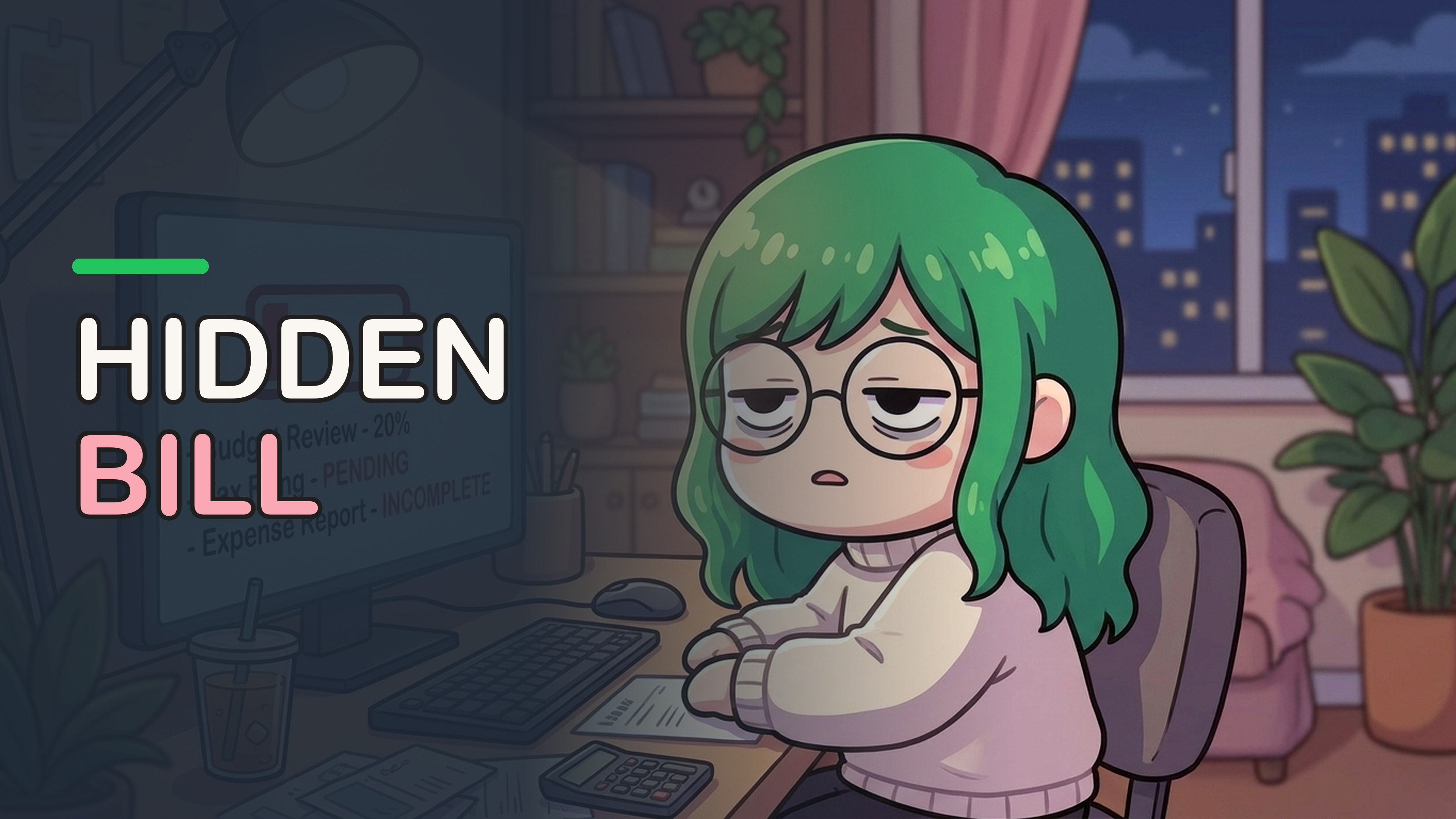
You quit the job that was draining you. The mornings get softer. You sleep past the alarm, make breakfast in an actual pan, go to Pilates when everyone else is in a meeting, and stop spending Sunday night bargaining with the ceiling about Monday morning.
Then an apartment application asks for your income.
Not the household income. Yours.
And for one very quiet second, the answer is zero.
Your lifestyle has a provider, but you do not have a paycheck. The home feels shared, but your name may not be on it. The money is called ours in conversation, but the bank, the tax code, the retirement plan, and the landlord may have a much more specific definition.
That does not make you lazy. It does not make domestic work fake. And it definitely does not mean every relationship with a provider is controlling. Wanting rest after years of being told to optimize your career, your body, your apartment, and your morning routine is not a character flaw.
But the stay-at-home girlfriend fantasy hides a bill. Not because softness is frivolous, but because the person leaving paid work often gives up protections while the person earning money keeps accumulating them.
So let us open the bill. Seven prices, none of them designed to shame you, and then five things that should stay in your name if you choose this life.
The fantasy works because it is solving a real problem.
Workplace burnout is not imaginary. In recent Gallup data, women reported feeling burned out more often than men. A large American workplace survey found that most workers had recently experienced at least one feeling commonly associated with burnout, like low energy, low motivation, or isolation.
Then your feed offers a before and after. Before is fluorescent lighting, unread messages, and lunch eaten above a keyboard. After is a quiet kitchen, fresh flowers, matching lounge clothes, and a boyfriend who says, I have got it.
That image is powerful because relief is immediate and risk is delayed. You feel the missing commute today. You do not feel the missed promotion, smaller retirement balance, or awkward résumé conversation for three years.
And the feed hides the financial scaffolding. You see the apartment, not the lease. You see the grocery haul, not the health insurance policy. You see a woman who does not have a job, while she films, edits, posts, negotiates sponsorships, and runs a media business about not having a job. Apparently labor disappears when the lighting is warm enough.
You are not foolish for wanting what the image promises. Your brain is correctly identifying a need for rest, care, and control. The expensive mistake is assuming the aesthetic includes protection.
Price one is the paycheck you can see disappearing.
When you leave a job, you lose more than direct deposit. You may also lose employer retirement money, subsidized health insurance, paid leave, disability coverage, training, and raises built on your current salary.
Imagine you leave a fifty-five-thousand-dollar job for three years, and your pay would otherwise rise three percent each year. That is about one hundred seventy thousand dollars of missed gross wages. This is an illustration, not a prediction of what your break will cost. But it translates the choice into the right unit. You are not only trading this month's paycheck for peace. You may be trading several years of income growth.
Meanwhile, the mental load does not necessarily vanish. It can mutate. Instead of monitoring deadlines, you monitor whether your spending looks excessive, whether the house is clean enough, and whether you have earned the right to call shared money yours.
Price two is the career clock.
You can pause your job. Your industry does not pause with you. Software changes. Licenses expire. Coworkers become managers. The salary you would use as your next negotiating anchor stops moving.
Research on work interruptions connects time out of employment with lower later earnings, although the size varies by person, occupation, timing, and reason. A recent review of hiring experiments also found that longer employment gaps can reduce interview chances. That does not mean nobody will hire you. It means your return path can become more expensive the longer you leave it imaginary.
The exhaustion tax here is avoidance. The gap makes the résumé feel embarrassing, so you delay updating it. Then the delay makes the gap larger, which makes the résumé feel even more threatening. A planned break slowly becomes a story you are scared to explain.
Price three is the retirement blank.
No workplace income means no new workplace retirement contribution. If you are unmarried and have no qualifying earned income, your boyfriend cannot simply fund a spousal individual retirement account for you. That exception is for married couples filing a joint tax return.
You can still own savings and investments in your name. But the account type and tax rules matter, because romantic vocabulary does not create tax eligibility.
Social Security also follows earnings. It uses your highest thirty-five years, and zero-earning years can reduce your own benefit if you do not later replace them with enough stronger years. Ordinary girlfriend status does not automatically create spousal retirement benefits either.
This is how one peaceful year can leave three blanks: no salary, no workplace contribution, and no new earnings on your Social Security record.
Price four is borrowed borrowing power.
Quitting your job does not automatically lower your credit score. Income is not part of a standard credit score. That is the good news.
The less cute news is that lenders and landlords can still care about current income, debt, assets, savings, and whether the money is likely to continue. You can have an excellent score and still need your partner to qualify for the apartment, the mortgage, or the car.
That creates a strange version of adulthood. You may help manage an entire household but need a co-signer to prove you can pay for your own exit. The goal is not merely a pretty score. It is independent financial capacity.
Price five is marriage-shaped labor without marriage-shaped law.
You may cook, clean, manage appointments, plan travel, host family, support his career, and improve a home that rises in value. The labor can look very married. The law may still see two unmarried individuals and property owned by whoever is on the title.
Rules vary by state, and some unmarried partners can enforce written or implied agreements. But there is no universal breakup process that automatically divides assets because the relationship felt permanent. Unmarried partners generally do not receive automatic inheritance rights. Homemaking contributions can be difficult and expensive to prove after the fact.
Marriage is not a magic force field. Married women still need access, information, savings, and current beneficiaries. But marriage comes with legal infrastructure that a girlfriend may have to build manually. Love is an emotion. Title is a document. Please do not ask one to do the other's job.
Price six is one-income concentration.
Even a wonderful provider can be laid off, become ill, burn out, or face a family emergency. A two-income household can lose one paycheck and still have another. A one-income household can lose the engine and the backup plan in the same week.
This matters in a country where fewer than half of adults under thirty say they could cover a four-hundred-dollar emergency entirely with cash. If your personal emergency fund is also zero, a household shock is not only stressful. It can erase your ability to choose what happens next.
The risk is not that he will definitely fail you. The risk is that you have asked one human being to be a partner, employer, insurance policy, retirement system, landlord, and emergency fund simultaneously. That is a lot of job titles for one boyfriend.
Price seven is the permission economy.
Financial dependence is not automatically financial abuse. A budget agreed by two people is normal. Unequal income can still exist inside a respectful, transparent partnership.
The line changes when money becomes a tool for surveillance, punishment, blocked information, sabotaged work, debt in your name, or making departure impossible. The United States Department of Justice recognizes restricting access to money, assets, credit, financial information, or employment as forms of economic abuse.
But the permission economy can begin before a label feels obvious. You stop asking, can we afford this, and start asking, will he be annoyed if I buy this. You avoid a course because he thinks you do not need it. You have access to a card but not the account. You know the monthly spending limit but not the household net worth.
The problem is not that somebody else earns the money. The problem is that your daily life depends on staying agreeable to the person who controls it.
And here is the cruel paradox.
You may choose this life because you want to feel cared for, but without protection, the arrangement can make care harder to distinguish from permission.
Your domestic contribution can be real while your ownership is imaginary. You can make his earning life easier while making your own earning life harder to restart. You can live inside a beautiful home and have no right to remain there. You can build a shared lifestyle while building almost nothing that follows you.
This is not proof that your relationship is bad. It is proof that good intentions and strong paperwork solve different problems.
A safe supported life should not require you to become unemployable, uninformed, or unable to leave. If the arrangement is loving, protecting you should not feel like planning its failure. It should feel like acknowledging the value you are already contributing.
So use the Five Things in Your Name Rule.
First, cash in your name. Keep a checking account that you control. Before leaving paid work, build three months of realistic solo essentials, then work toward six. Not three months of shared groceries in his apartment. Three months of housing, food, transportation, insurance, medication, phone service, and minimum debt payments if you had to stand alone.
Second, credit in your name. Maintain at least one account that is independently yours, use it lightly, and pay it on time. Check your credit reports. Know the passwords and recovery information. Being an authorized user can help in some situations, but access to his card is not the same as credit that belongs to you.
Third, assets in your name. Decide exactly how you will continue building personal net worth. Use an individual retirement account only when you are eligible. Otherwise, use individually titled savings or investments with qualified tax guidance. The contribution should be recurring and specific, not whatever happens to be left after the household upgrades its couch.
Fourth, paperwork with your name. Get state-specific advice about a cohabitation or property agreement. Review the lease or deed, wills, powers of attorney, beneficiary forms, health coverage, life insurance, and disability insurance. Decide what happens after separation, death, illness, or a major income change. A promise is lovely. A beneficiary form is what the plan administrator reads.
Fifth, a return path with your name. Keep one verifiable bridge back to income. That can be a current credential, portfolio, part-time work, freelance clients, continuing education, or a dated return-to-work plan. Twice a year, update your résumé, talk to two people in your field, and look at real openings. This is not hustle culture sneaking back in through the window. It is keeping your emergency exit from rusting shut.
You do not have to reject softness. You do not have to prove empowerment by being exhausted forever. And you do not need to treat love like a hostile business merger.
You only need to stop confusing being provided for with being protected.
So which of the five is missing from your life right now: cash, credit, assets, paperwork, or a return path? Put the answer in the comments, then send this to the friend who keeps saying, he takes care of everything, when what she really deserves is a life that takes care of her too.
Sources & further reading
These are the research sources reviewed for this episode. Evidence and guidance can change; updated entries show a new date above.
- Sykes— journals.sagepub.com
- Gallup— gallup.com
- APA— apa.org
- BLS, Employment Characteristics of Families— bls.gov
- Federal Reserve SHED— federalreserve.gov
- American Economic Association, “Women's Power in the Household”— aeaweb.org
- Gladstone, Garbinsky, and Mogilner, Journal of Personality and Social Psychology— pubmed.ncbi.nlm.nih.gov
- BLS, Usual Weekly Earnings 2025— bls.gov
- Spivey, Industrial and Labor Relations Review— journals.sagepub.com
- Socio-Economic Review— academic.oup.com
- IRS— irs.gov
- SSA, Social Security Credits— ssa.gov
- SSA— ssa.gov
- SSA, Family Benefits— ssa.gov
- myFICO— myfico.com
- CFPB— consumerfinance.gov
- CFPB, Why Credit History Matters— consumerfinance.gov
- American Bar Association— americanbar.org
- IRS, Registered Domestic Partners— irs.gov
- U.S. Department of Labor— dol.gov
- HealthCare.gov— healthcare.gov
- DOJ Office on Violence Against Women— justice.gov
- CDC— cdc.gov
More in Money, Relationships & Culture

Start with your own patterns
The free Money Pattern Lab turns seven ordinary days into one clearer picture of your spending triggers.
Your PDF opens immediately. Confirm your email for the free welcome series and weekly letter. Unsubscribe whenever.